About Patrice DELECLUSE

He has over 35 years of experience in performance management and digital transformation. As a former Vice President at Gartner, he supported over 50 CIOs in modernizing their information systems, managing technical debt, and strategically aligning IT investments. Patrice also worked as CIO for renowned companies such as PwC, McKesson Europe AG, and Mars Europe, where he focused on cost optimization and value creation. His expertise, spanning the services, retail, and FMCG sectors, makes him a recognized leader in supporting CIOs to meet the strategic expectations of senior management.
With over 40 years of experience in IT and having supported more than 50 CIOs, Patrice DELECLUSE shares tools and methodologies for structuring, defending, and aligning budgets with the company’s strategic priorities. Whether you’re looking to control costs, justify your investments, or meet the expectations of finance departments, this article gives you all the keys to transforming your budget into a performance lever.
Introduction : The IT budget puzzle and cost accounting as a solution
I’ve been working in the IT world for over forty years. Over the course of my career, I’ve had the chance to coach over fifty Chief Information Officers (CIOs), first at Gartner and then at Hubadviser. And year after year, I always come across the same problem that plagues them : how to build their CIO budget?
The questions are flying :
- Where to start ?
- What to include in this budget ?
- How to defend it in a board meeting ?
- What expenses should you prioritize ?
The list is long, and it’s easy to lose track. But through discussions and hands-on practice, I ended up adopting and getting others to adopt a particularly powerful tool : CIO Cost Accounting. This deliverable allows you to categorize, sort, and filter all IT-related financial components. In other words, it provides a clear and structured view of the entire budget, making it easier not only to track it, but also to defend it against financial and/or general management.
In reality, the whole difficulty lies in answering the two big questions that obsess your financial interlocutors :
1. Is our IT spending under control ?
2. Is our IT spending on the right things ?
This is precisely where cost accounting comes into its own. It provides a common language between IT and finance departments, a language that goes beyond the purely technical aspect to focus on the value it brings to the business.
Part 1 : How to build your IT budget?
Creating an analytical accounting system for the IT department budget : my story and the method that changed everything
Just a few years ago, I considered preparing my IT budget a real ordeal. Every year-end, I spent sleepless nights poring over my spending history, filling out endless Excel spreadsheets, and then having to justify every single line to the finance department. It was a veritable administrative nightmare that left me little time to think about strategy or launch innovative projects.
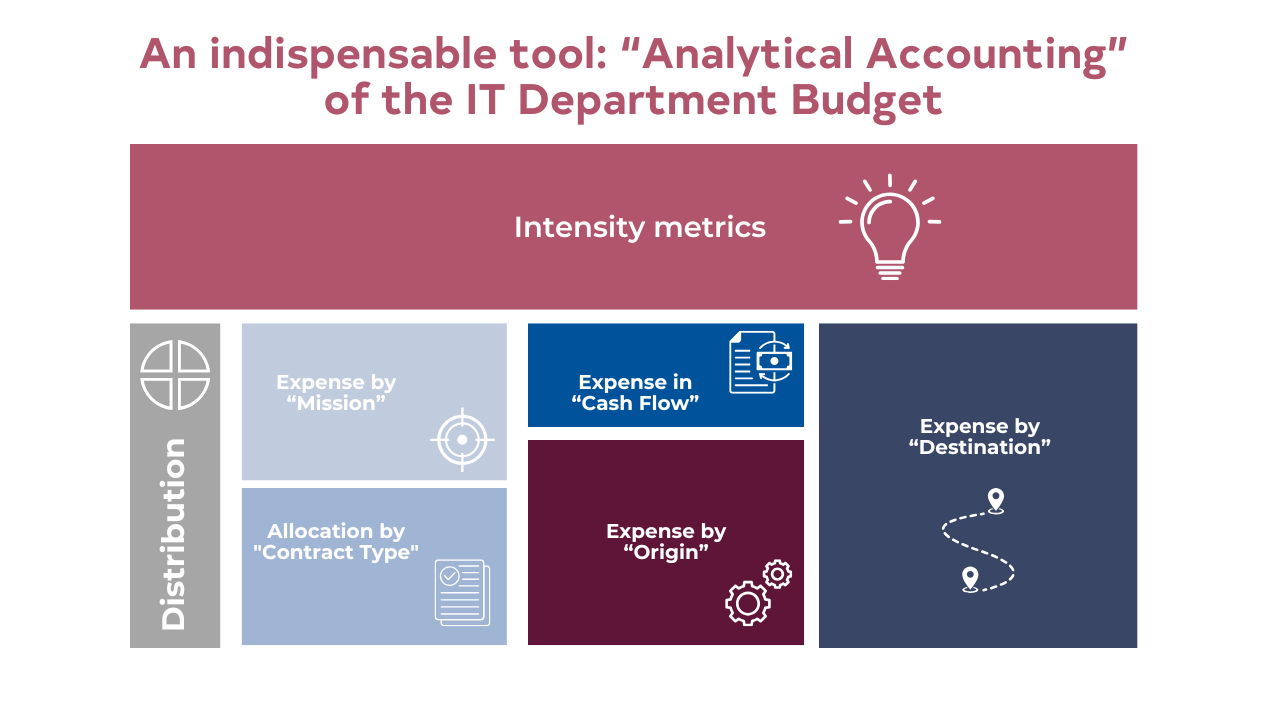
Then, over time, I discovered there was a quick and easy way to build solid cost accounting for my IT department. This approach transformed the way I build and manage my budget. Today, I can list my expenses in a matter of hours, thanks to five key dimensions that make my budget transparent to the entire company, including the Finance Department.
The five dimensions to consider
1. Cash flow (CAPEX vs OPEX)
The first step was to separate my expenses into two main categories :
CAPEX (Capital Expenditures) : everything related to long-term investments (new servers, infrastructure projects, long-term licenses, etc.).
OPEX (Operating Expenditures) : current operating expenses (subscriptions, support costs, salaries, etc.).
“A simple “SUMIF” formula was all it took to automatically total my CAPEX and OPEX. Finally, I could tell exactly how much the “day-to-day” cost compared to investments aimed at preparing for the future.”
2. Expenses by mission: MCO/MCS, growth, transformation
I then began classifying each expense according to its purpose:
Operational Maintenance/Security: Everything that helps keep existing assets efficient and secure.
Growth: Initiatives designed to support increased activity (expansions, new site openings, etc.).
Transformation: Innovative or strategic projects that are game-changers (digitalization, business application redesign, etc.).
“In the past, I would lump everything into a ‘Miscellaneous Projects’ catch-all. Today, I can precisely demonstrate the portion of the budget allocated to maintaining existing assets, the portion dedicated to supporting growth, and finally the portion that funds innovation.”
3. Origin of expenses: hardware, software, personnel (internal/external)
Beyond the purpose, I wanted to understand who or what was generating the costs. To do this, I added a “Category of Origin” column:
Hardware: servers, network equipment, workstations, etc.
Software: licenses, cloud subscriptions, development tools, etc.
Staff: salaries, consulting services, outsourcing, etc.
“This breakdown allowed me to see, for example, that the share of expenses related to external personnel was skyrocketing. I was then able to better justify the idea of strengthening my internal team to reduce dependence on service providers.”
4. Destination of expenditure : applications, infrastructure, global support
I also felt it was important to distinguish where the money was actually going. So I separated:
Applications: any expenditure specific to a software or business solution (ERP, CRM, etc.).
Infrastructure: networks, data centers, servers, etc.
Global Support: maintenance or cross-functional services not directly associated with a particular app.
“Ultimately, I was able to clarify which projects were focused on key applications and which investments were aimed at supporting the overall technology base.”
5. Intensity metrics
Finally, to give even more meaning to my tables, I included intensity indicators:
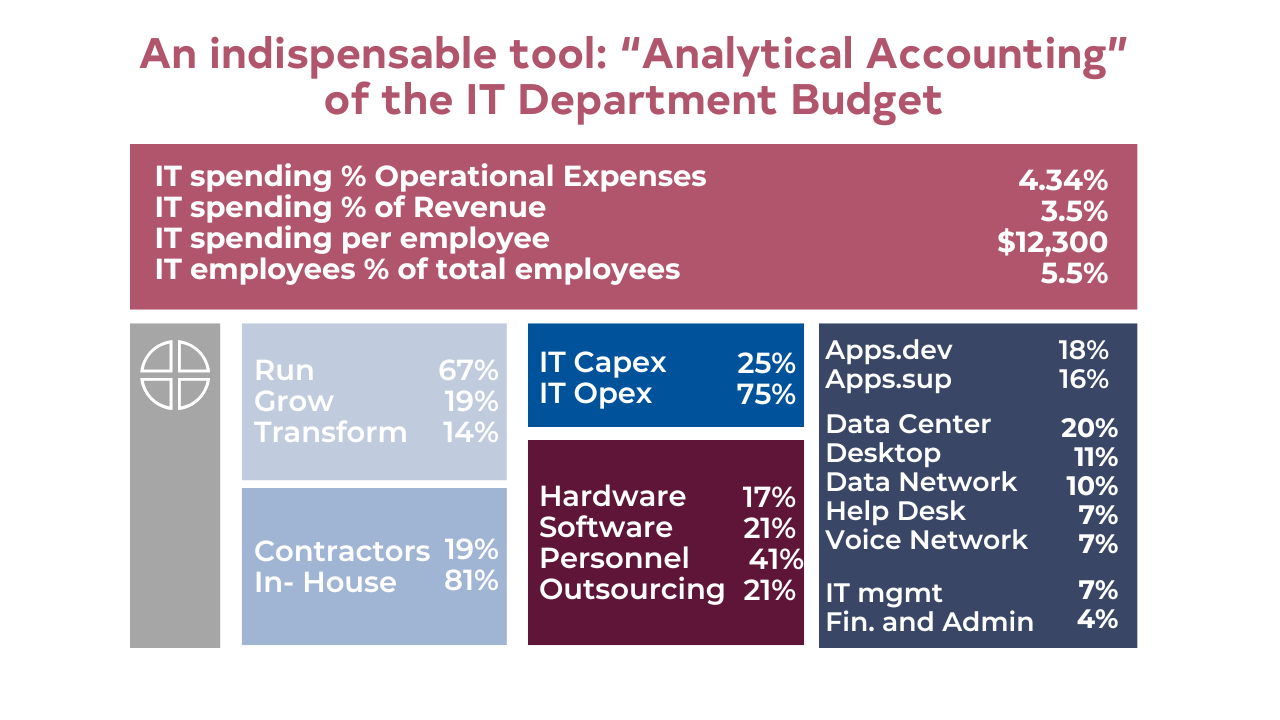
The share of the IT budget in the company’s operating expenses.
The share of the IT budget in revenue.
Expenses per employee or relative to the IT headcount.
“With these percentages and ratios, my Finance Department can instantly compare our IT department to other departments or refer to external benchmarks.”
A real change of perspective
Since I implemented this five-dimensional cost accounting, my dashboard has become more than just a report: it’s a true management tool. The Finance Department finally finds clear answers to its questions, and I’m no longer seen as a technical “one-man band” who spends without counting, but as a strategic player contributing to the company’s balance and growth.
“I can now anticipate, arbitrate, explain, and above all, demonstrate the value created by the IT department. No more vague justifications: everything is under control and clearly documented.”
Below is a view of the budget to obtain :
Here with metrics that we find in a classic IT department:
PART 2 : How to sell the IT budget to the CFO ?
After developing your budget by providing your Finance Department with a clear vision (particularly thanks to cost accounting and its five dimensions), the next step is to effectively “sell” it. To achieve this, it’s not enough to list numbers: you need to tell a story, highlight the value creation, and demonstrate how these expenses will support the company’s overall strategy.
1. Adopt a “business” managerial posture
The first golden rule is to talk “business” and not get into overly technical details. Of course, you, as the CIO, know exactly what a router, a firewall, or a monitoring tool is. But to be convincing, you must be able to translate these topics into concrete benefits for the company. So, instead of presenting your request for €50,000 to deploy new routers, you should explain that the investment involves €50,000 to ensure continuity of communications, streamline data exchanges, and guarantee better quality of service for all teams. With this perspective, the Finance Department quickly understands the impact on productivity, collaboration, and ultimately, on the company’s business.
This change of posture is essential : you are not there to detail the latest version of software or describe how efficient a server is, but to show how these solutions will contribute to the company’s strategy and positioning in its market.
2. Clearly distinguish between operating expenses and capital expenses
There are two main categories of expenditure: operating expenditure and investment expenditure. The former encompasses maintenance, operations, and everything that simply keeps the machine running. The latter aims to give the company a competitive advantage through more ambitious projects.
Operating expenses
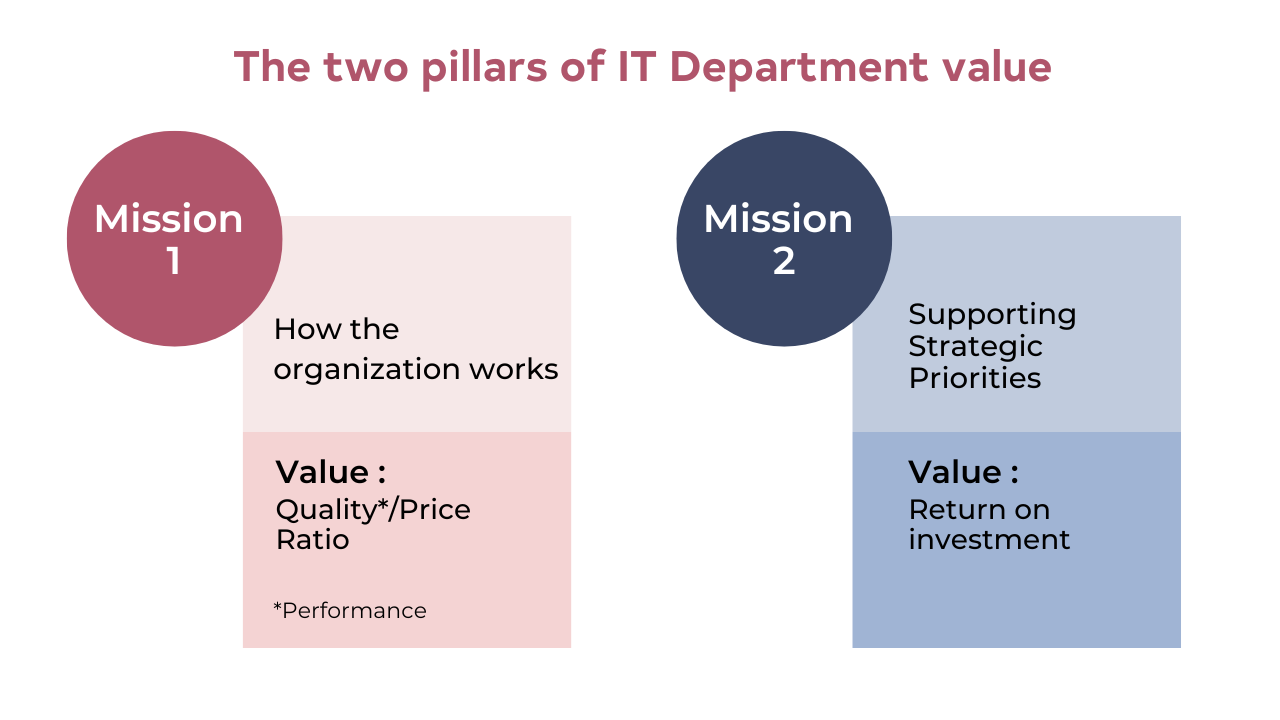
Let’s take the example of expense management software. It’s clear that this solution doesn’t, in and of itself, have a monumental impact on competitiveness. However, it is essential to ensure good administrative management. In this case, what you need to emphasize to your Finance Department is the systematic search for the best value for money: show that you’ve studied the market, compared offers, and negotiated with different service providers. Prove that you’re not proposing this expense lightly, but that there’s a real concern for economic efficiency behind it.
Capital expenditure
However, when it comes to larger investments, you need to highlight their return on investment (ROI) and strategic impact. Imagine a manufacturing company that wants to digitize its factories by equipping itself with data analytics tools. Explain, with supporting figures, how this project can improve production, reduce machine downtime, optimize assembly lines, and therefore reduce costs or increase quality. Such an argument demonstrates to your Finance Department that the IT department is not only aligned with the company’s strategy, but also directly contributes to value creation and market competitiveness.
3. Reassure the Financial Department about your position as a “business partner”
Finally, in your speech, it is crucial to convey the idea that you are acting as a strategic partner and not simply as a “technology buyer.”
- Show that your CIO is involved in budgetary aspects: you know where you are going, why you are going there and how much it will cost.
- Emphasize that you are not thinking only in terms of “IT costs,” but in terms of gains for the organization: time savings, productivity, improved responsiveness, competitiveness, etc.
- Emphasize that you work closely with the various professions to understand their needs and provide solutions in an effective and sustainable manner.
In short, presenting your IT budget is much more than just a financial reporting exercise: it is an opportunity to promote the strategic role of the IT function within the company and to show that you are a real engine of growth. The subtlety lies in this ability to convert technical aspects into elements of added value, meaningful to the Financial Department, but also to the entire General Management.
PART 3 : Also talk about what you no longer spend
When it comes time to present your budget, your instinct may be to highlight everything you’ll be funding for the coming year or months. This makes sense: you want to explain your new projects, justify any increases in certain expense items, and demonstrate the value the IT department brings to the company.
However, you shouldn’t overlook another equally essential aspect : showing what you’re no longer going to spend. This step is crucial for the Finance Department, which wants to ensure that your budget doesn’t balloon out of control. For them, understanding that you can stop certain investments and thus free up resources is proof that you’re managing your projects with realism and maturity.
Show the projects you complete…And also the failures
Highlight projects that no longer require funding because they have achieved the expected results. This sends a powerful message: the budget allocated to these projects is freed up for other priorities. The budget is also a means of communication.
It can also be tempting to sweep failures or unsuccessful initiatives under the rug. But this approach often backfires:
- You could be criticized for never mentioning your failures, which would undermine your credibility.
- You would appear to be only asking for budget for new ideas without ever accounting for the ones that didn’t work.
On the contrary, putting your cards on the table by saying, “We’re stopping this project because the ROI isn’t there,” positions you as a reliable partner. Sincerity builds trust: management understands that you’re not trying to hide unnecessary expenses and that you’re redirecting resources toward more promising initiatives.
Ultimately, talking about what you’re no longer spending is further proof of your budgetary maturity. It sends a strong signal to the Finance Department: you know how to take business issues into account and make decisions, even when it means admitting that a project wasn’t successful. This is how you build a true relationship of trust and shared responsibility in managing the IT budget.
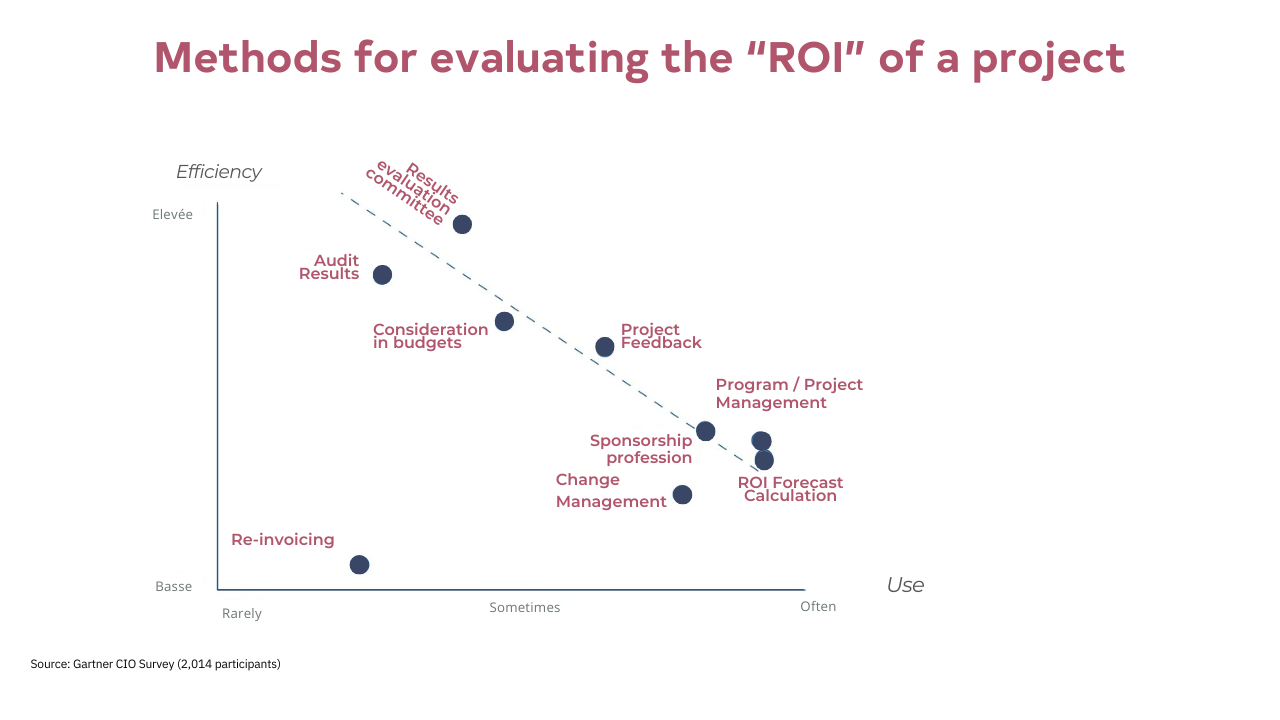
Use an ROI evaluation matrix
To determine which projects still deserve resources and which should be stopped, I recommend using an ROI matrix. It allows you to classify your projects according to :
- Their business value
- Technical quality
With such a tool, you quickly identify high-potential projects to pursue, and those that consume too many resources for too few results.
Ici, la représentation de cette matrice :
PART 4 : Don't omit complexity factors
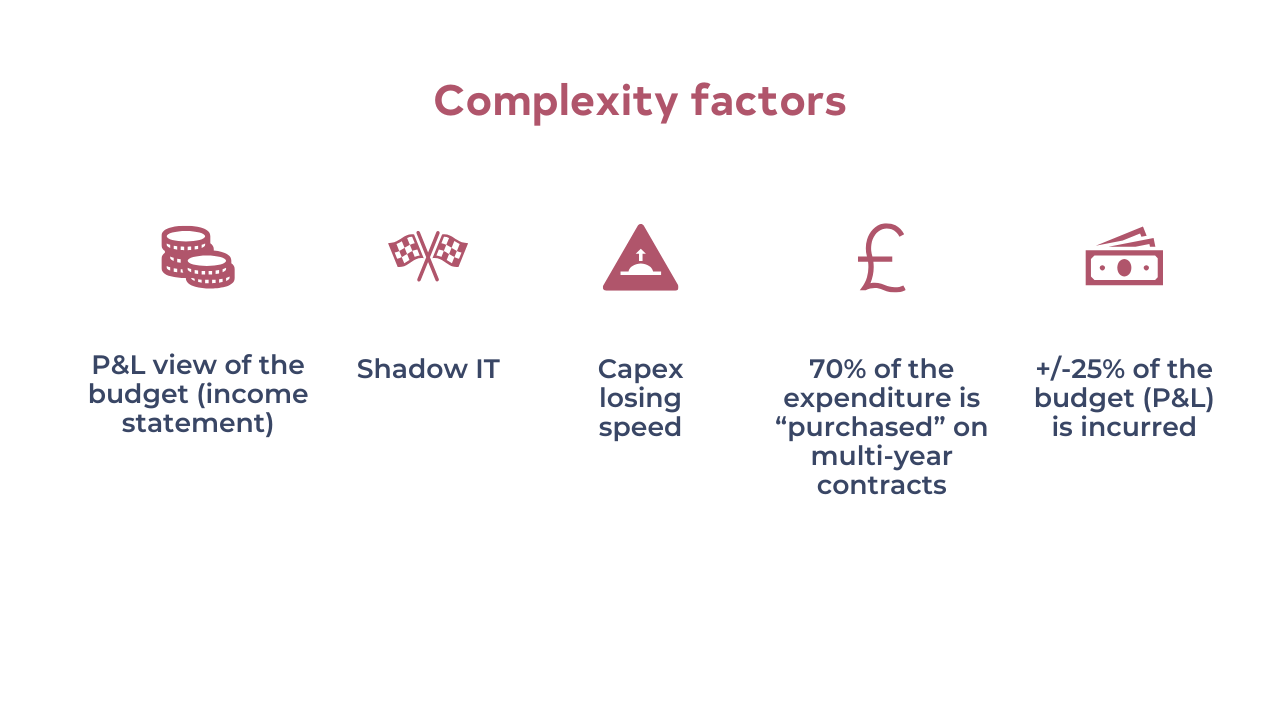
While cost accounting provides excellent visibility, it’s important to remember that the IT budget is part of a complex ecosystem, subject to constraints that go beyond simple cost allocation. Here are four things to keep in mind:
- P&L (Income Statement) Vision
The budget you present today will have an immediate impact on the following year’s results (N+1). However, this purely “accounting” view is not always sufficient to understand the strategic value or the longer-term impact of certain IT expenses. - Shadow IT
Many business departments are taking the initiative to purchase digital solutions outside the IT department’s control, generating “hidden” costs. For the Finance department, these off-the-radar expenses complicate overall budget monitoring. As an IT department, you’re often expected to find a balance, or even compensation, to control this significant portion of IT spending. - CAPEX vs OPEX
Capital expenditures (CAPEX) result in depreciation and amortization that takes place over several fiscal years, while operating expenses (OPEX) have an immediate impact on the income statement. This time difference sometimes disrupts your management’s financial benchmarks. You will therefore need to clearly explain why you are opting for one financing method or the other. - Multi-year contracts
In many cases, 70% of the IT department’s budget is already committed to long-term contracts (software licenses, maintenance, outsourcing, etc.). This limited flexibility limits the scope for quickly adjusting the budget. It is therefore essential to map out all of these commitments and demonstrate that you have control over their deadlines and costs.
By keeping these four dimensions in mind, you will be able to better anticipate questions and potential sticking points, and thus strengthen the credibility of your budgetary approach.
Conclusion : an IT budget, a lever for performance and credibility
Ultimately, building and presenting a clear, coherent, and strategically aligned IT budget is an essential exercise for strengthening your IT department’s credibility and demonstrating your role as a growth driver. Thanks to the various methods discussed, from cost accounting to identifying projects to be stopped, you can not only better manage your spending, but also gain the trust of your Finance Department and all your stakeholders.
If you’d like to explore your thoughts further, share your questions, or simply discuss budgeting and your IT strategy more broadly, please let us know. We’d be happy to schedule a meeting to help you optimize your projects and roadmap.